Saturday, 26 November 2016

Editing Techniques

Continuity Editing
This technique is used mainly to present the text in a chronological order to show the time movement of the narrative and to help make it more realistic because it looks as if it is continuous filming. It is supposed to look as if it is a real experience of moving through time, even though it would last a longer period of time. 

Cross Cutting
This is when an editor cuts between two separate scenes that are happening at the same time to show the link or difference between them.

Cut
Cut is one of the simpler and most common techniques as it is an abrupt move from one shot to another.

Cutaway
Cutaway shot is an interruption of a shot to show a similar scene, action, object or person before cutting back to the original scene. 

Dissolve
This technique is a gradual transition from one shot to another, when the original shot is on the screen but the second shot begins to gradually appear over the top of it until that shot is all you can see. 

Ellipsis
Used to speed up action by removing certain shots. For example you could use it to miss out the middle of a story to show how time has passed. 

Eyeline Match
A technique that keeps the eyeline when cutting from a character to what the character is looking at, putting us in the position of the character.

These are only a few out of a variety of editing techniques, but by doing this research I have learnt a lot about how I can use some of these techniques in our own work. It is also important for me to understand some editing techniques so I can take them into consideration while filming to make sure they turn out how they are supposed to be and plan them out before hand.

Thursday, 24 November 2016

Simon Hall

Today in our lesson Simon Hall, who is the BBC's crime correspondent for the South West, came into our class to talk to us about his own experience in journalism as well as offering us advice on other areas in media careers. After listening to his talk it made me think about what I want to do in the future and what a career in journalism would be like even though it wasn't something I had ever considered before, but he was very passionate about what he does. He was telling us just how influential the media is on our everyday lives, especially nowadays when it's everywhere and people are constantly being updated with whats going on around the world. Because of this is was something for us to think about when it came to our own film openings and the influence it can have on those who watch it as you are portraying characters.

Thursday, 10 November 2016

Mise-en-scene

Mise-en-scene is everything that is seen through the camera and how it is arranged. It covers everything from props, make-up, costumes and setting. It is a french term and translates to "put into the space". Every part of mise-en-scene has a hidden meaning and gives off clues and signals.

Setting
The sets are either filmed on location or are built exactly how they are wanted in a studio. The setting is one of the most important aspects as if the set or location isn't right then the whole movie wouldn't make sense. It can help reflect the characters mood and sets the atmosphere for the rest of the scene. 

Costume, Hair & Make-up
Just like setting, costume, hair & make-up is an automatic clue to the audience of whether the film is set in either the past or present, their status, job and personality is like. It can also tell the audience what culture they are from. It is also whats makes every character unique as each one will have a different look to represent their characters personality. 

Staging and Acting
The actor or actresses is definitely one of the most important aspects as if they can't act well then the it ruins the whole thing. Their facial expressions tell the audience straight away how their character is feeling, if they are smiling then you automatically presume they are happy. Body language also has this effect because it can show if they are scared or nervous, but can also show the relationship between two characters. 

Positioning
The positioning of two characters can also show the relationship between the characters. If the positioning is right then it can help to draw the audiences attention to a particular object or character. 

Lighting & Colour
The lighting and colour can help create a certain atmosphere and can reflect the mood of the character or the setting. It can be used to highlight a character or object to draw the audiences attention to it. If done properly it can also be used to show a characters mental state or even make a character appear mysterious by using shading. Colour can show connotations, for example yellow could show that the mood is happy. 


Monday, 7 November 2016

Student Film Openings Evaluation

What I like most about this film opening is that fact it's realistic and believable, making you want to watch on and keeps the viewer gripped. When the ident comes up at the start it is done really well and looks professional with the use of the sounds effects and editing. Its made to look old fashioned and fits well with the genre of the film. The first shot used is of the characters hands tied up and the camera slowly zooms in to help exaggerate and straight away tells the audience that he is in some kind of trouble. The camera then switches to an out of focus shot of the characters shoes and as it slowly comes into focus a quiet clicking noise of a camera is used in the background, wants in focus the titles then start and you can hear a child shouting in the distance. To help set the scene and give the viewer an idea of whats going on a tracking shot is used to show that he his tied up in the middle of nowhere and the dark lighting helps to set the atmosphere. A split screen is then used to show four different angles through a security camera which shows that he is clearly being watched. A close up is used to show the dirt across his face and so you can get a clear idea of his emotion. As he is looking around a shallow focus is used to keep the attention on the character so your eyes are drawn to him. 
Towards the end the shot switches back and forth of the characters feet and hands to show he is clearly struggling and different shots are used as flashbacks of what happened, giving the audience more of an insight of what is yet to come. As this is happening the music gets faster and faster creating suspense before the screen goes black and the title comes appears. 
Overall I really like this opening film as the filming isn't shaky at all and all the shots are done well, this is helped by the editing as it all runs smoothly and doesn't jump to any shots that don't make sense. The music and sound used is appropriate and used at the right times, helping to set the atmosphere and create suspense. It has also given me lots of ideas for my own film opening, especially the use of the flashbacks at the end as I think it links it all together and makes the audience want to watch on by giving them slight clues.

Link:- https://www.youtube.com/watch?v=Y9OgmWjJYuo

Sunday, 6 November 2016

Film Openings

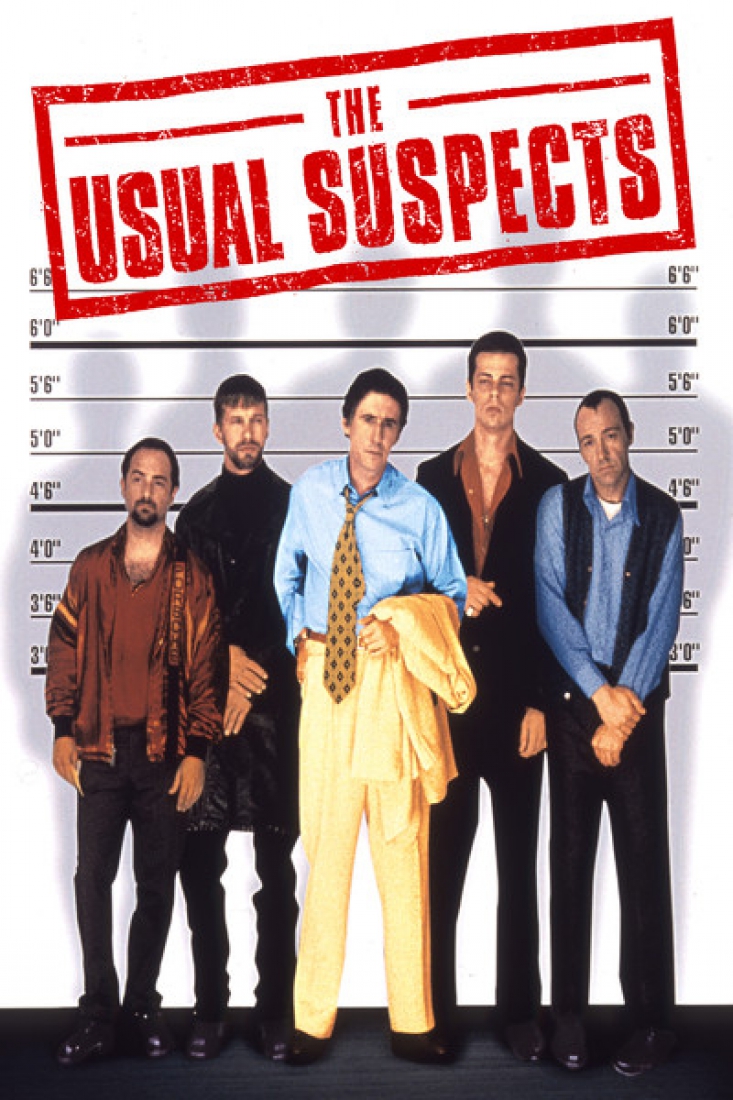
Image result for the usual suspects posterThe Usual Suspects
Image result for blade 1998 posterStraight away with the opening shot by using matches you can tell that the film is going to include some kind of action. In this shot you are also introduced to the first character lighting a cigarette where the setting is dark and eery. The sound used in the background is a constant water running and the flames used in the background suggest danger. The shot is then changed to a shot of a man lying on the floor beside him who looks as if he's dead which gives you the first impression of the main character and that he is clearly some kind of killer. A panning shot is then used to show a dark figure standing just above them. The act that a low angle shot has been used shows that this character must have some kind of power.


Blade
The opening to this film is quite unusual as they have to walk through a room full of animal carcases hung from the ceiling before entering a club through a guarded door. The strobe lights and loud music add to the atmosphere as it becomes more intense, especially as they are in a cramped space. All of a sudden blood is pouring from the sprinklers in the ceiling and everything goes a bit mental. This is also when it starts to get a bit confusing as there is a lot going on at the same time and a lot to take in, however despite this it tells the audience that there is clearly going to be a lot of violence through out the film. 


Mottai Boss
I found the opening to this film a little confusing as I didn't really get what was going on. It starts off with a man stepping out of a helicopter to a crowd of people, suggesting he is clearly important and possibly the main character. This links to the music playing in the background which repeats the words "the boss". The fact the army is also seen to be there could show that he his clearly a powerful figure and could suggest there is some kind of violence in the film. 

AS Coursework


What is the task?
50% of our overall AS grade will include our blog and our film opening as well as our title sequence. The rest of our 50% is graded on our written examination.

Assessment
Our assessment is to put together a film opening with titles for a new fiction film and must be between 2 and 2 and a half minutes maximum. It must also follow the conventions of a film opening. The deadline for this task is sometime in March and we will be using some of our own equipment and some of schools. The overall total for this task is 100 marks and is split into different sections such as:


  • 20 marks for research and planning 
  • 60 marks for construction
  • 20 marks for evaluation 


Saturday, 5 November 2016

Art of The Title: Timeline of Opening

As part of our research I decided to do a timeline on the opening of Juno to see which titles they have included and in what order.


http://www.artofthetitle.com/title/juno/