Monday, 12 December 2016

Our Pitch

In order for us to get feedback for our film opening me, Eleanor and Jasmine presented our pitch of all of our ideas to the class. By doing this it gave us an idea of how many people would go and watch it, who our film is mainly aimed at and whether or not our idea needs any improvements to make it better. When asking the class who would go to see it everyone put their hands up and gave us the following feedback:

  • "Very engaging"
  • "Plenty of research to back it up"
  • "Set in local area"
  • "Good enigmas"
  • "Good that it's based on a true story"
By doing the pitch I learnt about how important it is to make sure you are organised and know exactly what is going to happen in order to make sure you are making your ideas sound as best they can to really get your audience hooked on your ideas. Our pitch included what our idea is, where it will take place, the characters we will be using, the conventions of our genre, enigmas and the different shots we would like to use.  


Moodboard for Hair & Make-up

Because we are doing a modern twist on the story I have decided to use modern hairstyles on the two 15 year old girls.They will be quite done up as according to the girls at the time they were in the lanes looking for potential boyfriends, meaning they will be looking their best. One of them will have straight hair and a side braid while the other one has beach waves. However for both the girls and Genette I have decided with the make-up to keep it quite natural looking to reflect their age.


Sunday, 11 December 2016

Title Ideas

When deciding on a title for our film opening we wanted to keep it short so that it didn't give too much away, adding to the mystery as no one knows who Genette is. Some of our other ideas included:

  • Missing 
  • Vanished
  • Withen Lane
  • Without a Trace
After asking some of our friends which one they preferred and worked best we chose to stick with Genette as it was simple and memorable, but those who don't know anything about her would also be curious to find out more, especially as it's based on true events.

Timeline of Events

To help us understand exactly what happened so that the events were clear and in the right order I made a timeline.

Wednesday, 7 December 2016

Research on Genette Tate

Because we have decided to do our opening based on a true event it meant we had to do lots of research so we knew exactly what happened and understood it so our opening could be as realistic and exact as possible. This meant finding out the exact location and order of events. Here are a couple of pictures of the research I did and what I found out:


By doing this research it means we know exactly where Genette was and what she was doing on the build up to her disappearance. We found out that the areas we will have to film and where our opening will be set will be Sidmouth Road, Aylesbeare and Within Lane. 

Opening Sequence Task

For our film opening task we have chosen a crime/drama genre, as we decided that our storyline was going to be about the disappearance of Genette Tate. Genette went missing when she was only 13 years old and has been missing since for 38 years, making her one of the longest missing people in the UK. Even though the disappearance took place in 1978 we have chosen to do a modern twist on the story.

The first thing we did was research and watch other opening sequences with the same chosen genre and kind of storyline to ours. We watched The Blair Witch Project, Stranger Things as well as The Missing which is another student film with the same kind of idea. While watching these sequences it helped us come up with the different conventions of a crime/drama such as:
  • Mystery 
  • Realistic characters, storyline and settings
  • Tension
  • Journey of character development 
As well as conventions it is important to have narrative enigmas within the first couple of minutes of a film as this is what keeps the audience guessing and making them hooked to watch on because they want the answers to their questions answered. Some of the enigmas we came up with that link to our sequence are:
  • What happened to her?
  • Where did she go?
  • How long has she been missing?
  • Was it planned?
Through out our opening we are going to use both non-digetic and digetic sound. The digetic sound will be the girls talking and cars going past in the background and our non-digetic sound will be the echo of the girls laughing and emphasised door clicking. Some of the shots that we will also be using our:
  • Match on action
  • Tracking shot
  • Close up shot
  • Over the shoulder shot
  • Low angle shot

Animatic

This is our animatic for our film opening.


It is important that we make sure we have an animatic because it allows us to check if each shot will work or if you need to change the order of a particular shot to make sure it runs smoother. By doing this it means we can change any last minute thins that don't work properly so we don't end up waiting until filming and realising that something doesn't work.


Monday, 5 December 2016

Storyboard


This is a storyboard for our opening task, by doing a storyboard it gives us a rough idea of the order we will be doing each shot. It is a clear way of planning out our task and enables us to make changes before filming as well as showing which characters will be used where and when. 

Sunday, 4 December 2016

Codes and Conventions of a film opening

The purpose of a tile sequence or film opening is to help draw in the viewers attention to make them want to carry on watching. They are used to help establish the genre and characters in only the first few minutes. There are lots of different conventions that are included in an opening sequence such as:

Key credits- production company, main actors & director
Any film openings always start off with the production companies idents which automatically set the standard and exceptions of the film to the audience, as a larger, well known company are more likely to produce a big budget film.This is then followed by a title sequence which include the cast and production team who helped in the making of the film. 

Establishing characters 
It is important to have the key characters shown in the film opening as it shows their importance and role throughout the film. By showing the characters can also help the audience to guess the genre as certain characters are associated with certain genres.  

Enigmas 
Enigmas are usually used to create mystery and tension to keep the audience guessing. It keeps the audience intrigued and makes them want to continue watching as they want their questions answered. Enigmas are one of the most important factors in a film opening as it ensures the audience are hooked. 

Sound 
Sound also plays an important role in an opening sequence as it can help set the atmosphere and the scene. It can also tell the audience what the genre they can expect to see. They can usually include non-diegetic or diegetic sound, however non-diegetic is more common.

Establishing genre 

Throughout a film opening the audience should be able to work out what the genre is, usually done through the conventions suited to that film type, For example in a horror you would usually expect to see low key lighting, eerie music and dark colours like grey and black. 


Idents

Idents are what television programs or companies use to identify themselves and are usually either a short video or a still image representing the logo. They are an identity of the channel for the viewers so they are aware of what channel they are on and can be used to show what program is coming up next. They have many purposes such as branding, marketing, to help raise figures and can be used as a visual stimulation to break up the schedule.
It is important to for the ident to be unique as this is what carries the companies purpose and what they are using to represent themselves. Because of this it is crucial for companies to regularly alter their idents, coming up with new designs and ideas to make sure they are up to date. Key points to make an ident more interesting and memorable are entertainment, tempo, audience interaction, setting and density. 


This example shows just how much the BBC have altered their logo over the years, from their first ever ident back in 1953 to present day. It shows that as technology has improved idents have gone from still black and white images to full colour short videos that we see today. By keeping their idents up to date it ensures that they stand out from the rest of the competition as idents are becoming more and more popular. Because almost every production company nowadays have their own idents as away of representing themselves, when it comes to us creating our own idents for our main task we need to ensure that it is unique and original. 

Other Ident Examples:-


Saturday, 26 November 2016

Editing Techniques

Continuity Editing
This technique is used mainly to present the text in a chronological order to show the time movement of the narrative and to help make it more realistic because it looks as if it is continuous filming. It is supposed to look as if it is a real experience of moving through time, even though it would last a longer period of time. 

Cross Cutting
This is when an editor cuts between two separate scenes that are happening at the same time to show the link or difference between them.

Cut
Cut is one of the simpler and most common techniques as it is an abrupt move from one shot to another.

Cutaway
Cutaway shot is an interruption of a shot to show a similar scene, action, object or person before cutting back to the original scene. 

Dissolve
This technique is a gradual transition from one shot to another, when the original shot is on the screen but the second shot begins to gradually appear over the top of it until that shot is all you can see. 

Ellipsis
Used to speed up action by removing certain shots. For example you could use it to miss out the middle of a story to show how time has passed. 

Eyeline Match
A technique that keeps the eyeline when cutting from a character to what the character is looking at, putting us in the position of the character.

These are only a few out of a variety of editing techniques, but by doing this research I have learnt a lot about how I can use some of these techniques in our own work. It is also important for me to understand some editing techniques so I can take them into consideration while filming to make sure they turn out how they are supposed to be and plan them out before hand.

Thursday, 24 November 2016

Simon Hall

Today in our lesson Simon Hall, who is the BBC's crime correspondent for the South West, came into our class to talk to us about his own experience in journalism as well as offering us advice on other areas in media careers. After listening to his talk it made me think about what I want to do in the future and what a career in journalism would be like even though it wasn't something I had ever considered before, but he was very passionate about what he does. He was telling us just how influential the media is on our everyday lives, especially nowadays when it's everywhere and people are constantly being updated with whats going on around the world. Because of this is was something for us to think about when it came to our own film openings and the influence it can have on those who watch it as you are portraying characters.

Thursday, 10 November 2016

Mise-en-scene

Mise-en-scene is everything that is seen through the camera and how it is arranged. It covers everything from props, make-up, costumes and setting. It is a french term and translates to "put into the space". Every part of mise-en-scene has a hidden meaning and gives off clues and signals.

Setting
The sets are either filmed on location or are built exactly how they are wanted in a studio. The setting is one of the most important aspects as if the set or location isn't right then the whole movie wouldn't make sense. It can help reflect the characters mood and sets the atmosphere for the rest of the scene. 

Costume, Hair & Make-up
Just like setting, costume, hair & make-up is an automatic clue to the audience of whether the film is set in either the past or present, their status, job and personality is like. It can also tell the audience what culture they are from. It is also whats makes every character unique as each one will have a different look to represent their characters personality. 

Staging and Acting
The actor or actresses is definitely one of the most important aspects as if they can't act well then the it ruins the whole thing. Their facial expressions tell the audience straight away how their character is feeling, if they are smiling then you automatically presume they are happy. Body language also has this effect because it can show if they are scared or nervous, but can also show the relationship between two characters. 

Positioning
The positioning of two characters can also show the relationship between the characters. If the positioning is right then it can help to draw the audiences attention to a particular object or character. 

Lighting & Colour
The lighting and colour can help create a certain atmosphere and can reflect the mood of the character or the setting. It can be used to highlight a character or object to draw the audiences attention to it. If done properly it can also be used to show a characters mental state or even make a character appear mysterious by using shading. Colour can show connotations, for example yellow could show that the mood is happy. 


Monday, 7 November 2016

Student Film Openings Evaluation

What I like most about this film opening is that fact it's realistic and believable, making you want to watch on and keeps the viewer gripped. When the ident comes up at the start it is done really well and looks professional with the use of the sounds effects and editing. Its made to look old fashioned and fits well with the genre of the film. The first shot used is of the characters hands tied up and the camera slowly zooms in to help exaggerate and straight away tells the audience that he is in some kind of trouble. The camera then switches to an out of focus shot of the characters shoes and as it slowly comes into focus a quiet clicking noise of a camera is used in the background, wants in focus the titles then start and you can hear a child shouting in the distance. To help set the scene and give the viewer an idea of whats going on a tracking shot is used to show that he his tied up in the middle of nowhere and the dark lighting helps to set the atmosphere. A split screen is then used to show four different angles through a security camera which shows that he is clearly being watched. A close up is used to show the dirt across his face and so you can get a clear idea of his emotion. As he is looking around a shallow focus is used to keep the attention on the character so your eyes are drawn to him. 
Towards the end the shot switches back and forth of the characters feet and hands to show he is clearly struggling and different shots are used as flashbacks of what happened, giving the audience more of an insight of what is yet to come. As this is happening the music gets faster and faster creating suspense before the screen goes black and the title comes appears. 
Overall I really like this opening film as the filming isn't shaky at all and all the shots are done well, this is helped by the editing as it all runs smoothly and doesn't jump to any shots that don't make sense. The music and sound used is appropriate and used at the right times, helping to set the atmosphere and create suspense. It has also given me lots of ideas for my own film opening, especially the use of the flashbacks at the end as I think it links it all together and makes the audience want to watch on by giving them slight clues.

Link:- https://www.youtube.com/watch?v=Y9OgmWjJYuo

Sunday, 6 November 2016

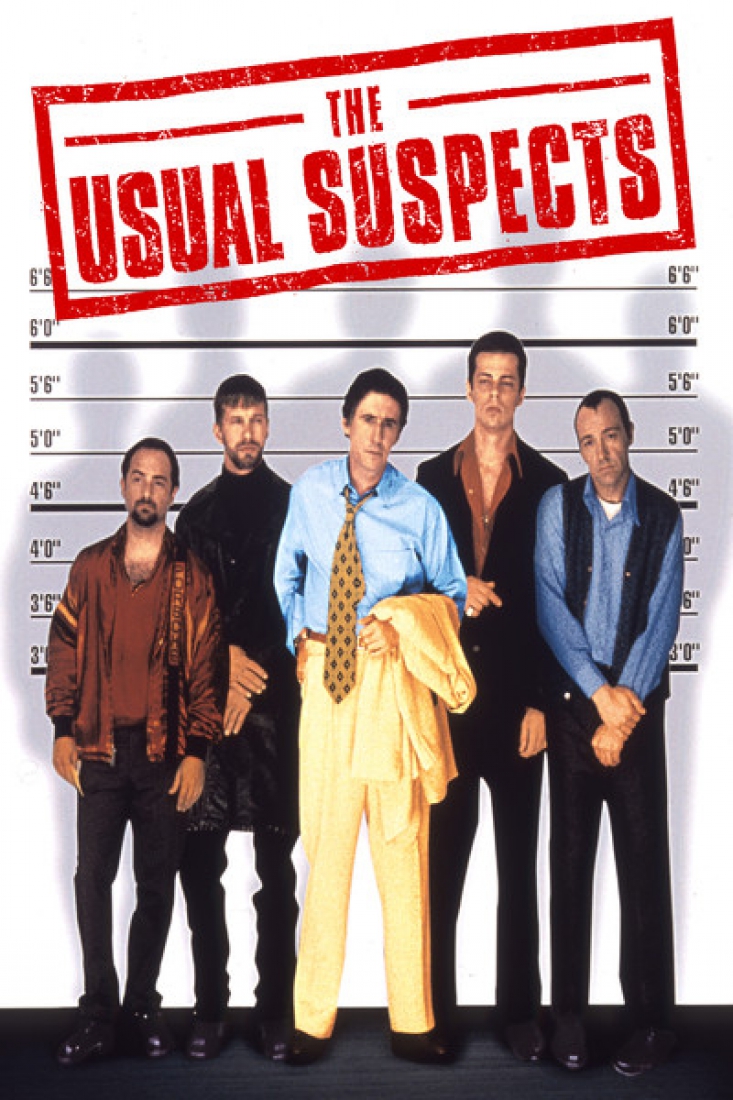
Film Openings

Image result for the usual suspects posterThe Usual Suspects
Image result for blade 1998 posterStraight away with the opening shot by using matches you can tell that the film is going to include some kind of action. In this shot you are also introduced to the first character lighting a cigarette where the setting is dark and eery. The sound used in the background is a constant water running and the flames used in the background suggest danger. The shot is then changed to a shot of a man lying on the floor beside him who looks as if he's dead which gives you the first impression of the main character and that he is clearly some kind of killer. A panning shot is then used to show a dark figure standing just above them. The act that a low angle shot has been used shows that this character must have some kind of power.


Blade
The opening to this film is quite unusual as they have to walk through a room full of animal carcases hung from the ceiling before entering a club through a guarded door. The strobe lights and loud music add to the atmosphere as it becomes more intense, especially as they are in a cramped space. All of a sudden blood is pouring from the sprinklers in the ceiling and everything goes a bit mental. This is also when it starts to get a bit confusing as there is a lot going on at the same time and a lot to take in, however despite this it tells the audience that there is clearly going to be a lot of violence through out the film. 


Mottai Boss
I found the opening to this film a little confusing as I didn't really get what was going on. It starts off with a man stepping out of a helicopter to a crowd of people, suggesting he is clearly important and possibly the main character. This links to the music playing in the background which repeats the words "the boss". The fact the army is also seen to be there could show that he his clearly a powerful figure and could suggest there is some kind of violence in the film. 

AS Coursework


What is the task?
50% of our overall AS grade will include our blog and our film opening as well as our title sequence. The rest of our 50% is graded on our written examination.

Assessment
Our assessment is to put together a film opening with titles for a new fiction film and must be between 2 and 2 and a half minutes maximum. It must also follow the conventions of a film opening. The deadline for this task is sometime in March and we will be using some of our own equipment and some of schools. The overall total for this task is 100 marks and is split into different sections such as:


  • 20 marks for research and planning 
  • 60 marks for construction
  • 20 marks for evaluation 


Saturday, 5 November 2016

Art of The Title: Timeline of Opening

As part of our research I decided to do a timeline on the opening of Juno to see which titles they have included and in what order.


http://www.artofthetitle.com/title/juno/


Friday, 21 October 2016

Preliminary Task


This is our preliminary task filmed and edited by me and two others in my group. Our task was to film a short scene, which must include a character opening a door and crossing the room to then sit down in a chair opposite another character where they will exchange dialogue. The short scene also had to include the camera shots we had already tried out such as match on action, shot/reverse shot and 180-degree rule. We successfully managed to include all three of the camera shots and managed to go over the recommended amount of a minute worth of footage. Because the scene had to include dialogue we decided to do the short scene of a girlfriend having an argument with her boyfriend, however next time I would make sure there was a set script prepared so they don't end up just repeating the same things over and over again. 

The main role I played was filming and by doing this and practising I definitely feel more prepared for my main task. I learnt that filming takes a lot longer than expected and when it comes to our main task I think filming more than just one take of each scene would be more helpful as you don't realise until editing that some of the scenes might not flow properly or there might have been a little mistake that you didn't notice when watching it back the first time. I also learnt that to make sure you get a clean edit it takes a lot longer then you first think, so when doing the main task I would make sure we get the filming done as soon as possible so there is plenty of time to edit or even redo a scene if it didn't work too well. 

Monday, 10 October 2016

Our Match On Action Example


Because match on action is a key technique used it is important that we try our own version to have a better understanding of how it works and how it is edited to ensure it is a smooth transition. 

Match On Action

Match on Action is a technique used for continuity editing. The technique is used to cut one shot to another shot to help the continuity flow smoothly without any sudden jumps. It can be used to show the subject finishing of the action they started in the first shot, but giving a clearer view. This shot is often used to film someone opening a door as you film them from behind when they start opening it and then then cut to in front to have the shot of them walking through.


Example:-
https://www.youtube.com/watch?v=eKS2d6TyiWo

Thursday, 6 October 2016

Camera Movements

Tilt
A tilt is a techniques that is used in a nodding motion. It is done in a fixed position, moving the camera up and down vertically.

Tracking Shot
This shot involves using a rail that can push the camera to follow the subject as they move. If you were to replace the rails with something with wheels the shot is then called a dolly shot.

Whip Pan
This technique causes the shot to blur as the camera pans so quickly. It can be used between characters and as a transition between shots, usually used in action films.

Pedestal
Pedestal is done without changing the vertical or horizontal axis of the camera, but still moving the camera up and down. Usually done by using a tripod to raise and lower the tripod head. 

Crane
A crane shot is similar to an aerial shot, the camera is positioned on a crane that is designed to be lowered and raised. It allows you to take a high-angle shot, but also lets you then swoop down towards the subject from the high-angle.

Zoom/Reverse Zoom
Even though this shot isn't a camera movement it involves moving the lens so you are able to move in close to the subject or pull away without having to physically move. It can help add energy if done at a fast pace.

Truck
This technique is the same as dollying, but instead of going in and out you move the camera from left to right. it can also be done by using a track to get a smooth shot. 

Arc Shot
Arc shot is similar to the tracking shot and allows the camera to move around the subject in a slight semi-circle shape.
By looking at different movements it will help us to think about how we can include them in our storyboard and final piece as this will ensure our sequence flows properly. It also makes us consider editing when filming and where different editing techniques can be used as you need to think about how one shot can smoothly link to the next shot without there being too much of a jump.

Monday, 3 October 2016

Bokeh

Bokeh is a common technique used in photography and when translated from Japanese means 'blur'. It makes an image become instantly more interesting, as it forces you to focus on a certain point of the image. Bokeh is caused by the lens and not the camera itself. It can be used to blur out light in photos or to blur out the background, leaving the subject the main focus point. In order to get the best blur there should be no hard edges, as the blur should be soft.

Examples:
Image result for bokeh photography

Image result for bokeh photography nature